The Craft
Big-Game Fishing From the Sand
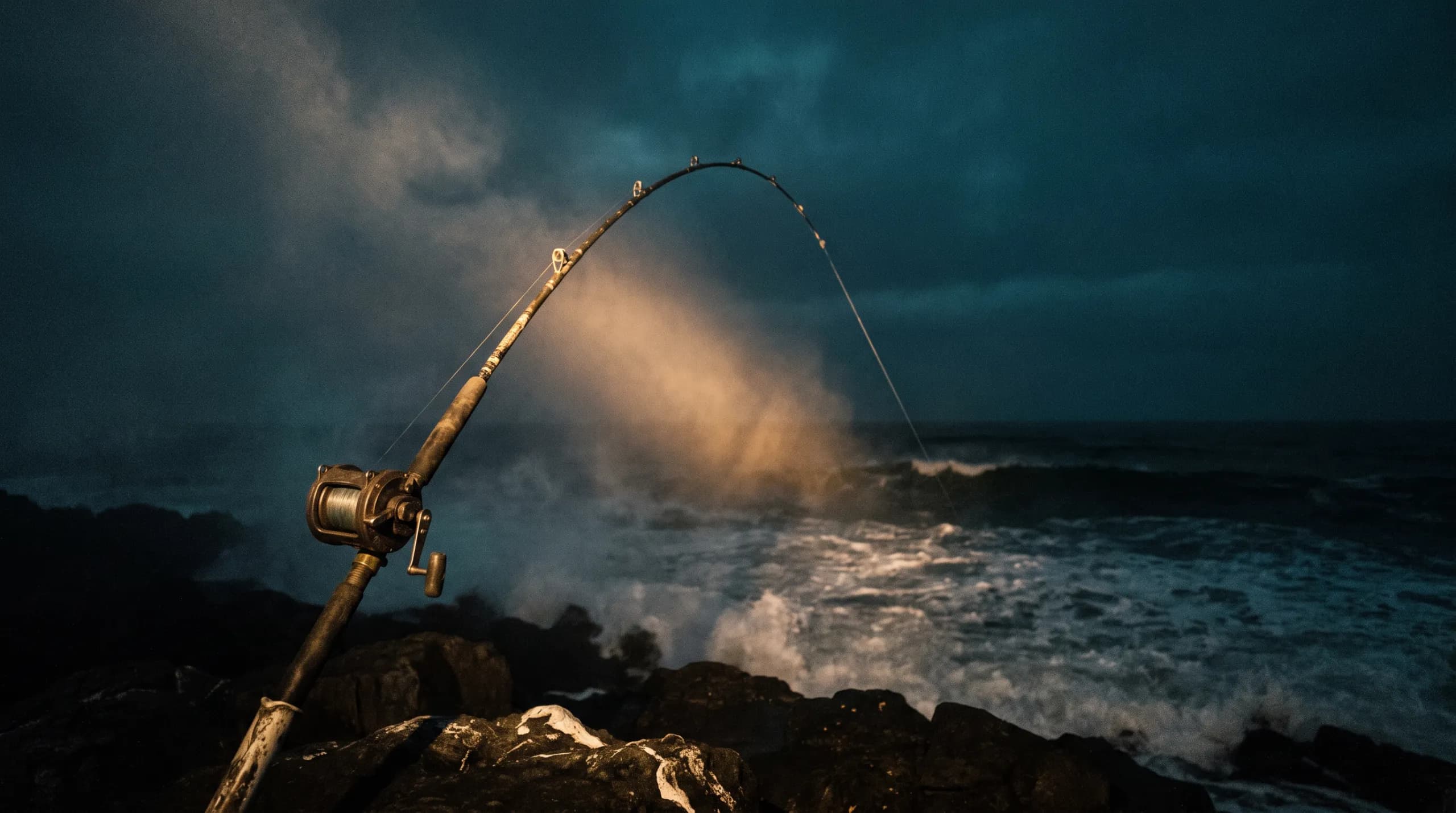
Land-based shark fishing is big-game fishing done from the beach. You're in a harness with 130 lb braid, tied to a fish that can outweigh you three to one, and there's no boat to chase it down. Every yard of line comes back from the sand.
- Fought from the sand
- Baits kayaked out
- FWC rules, to the letter
- 100% catch & release
How It Works
The fight happens
in the wash
Land-based shark fishing runs on heavy conventional tackle fished from the sand. A whole natural bait — a stingray wing, half a bonito — is rigged on a crimped leader, clipped to the main line, and kayaked out beyond the first sandbar, farther than any cast could reach.
The end of the fight is what a boat can't give you: leading a shark through breaking surf, turning her in three feet of water, and bringing her into the shallows at your feet. The last 30 yards take longer than the first 300.
The Setup
This is the gear that goes on every trip, the same setup we fish on our own nights.
Spec
- Reel
- Avet EXW 50/2 two-speed conventional
- Line
- 130 lb braid, 550+ yd capacity
- Rod
- 80–130 lb class shark rod
- Leader
- 400 lb mono to heavy cable, hand-crimped
- Hook
- 20/0-class non-offset circle hook, non-stainless
- Deployment
- Kayak
- Harness
- Full fighting belt + back harness
The Rules
The rules that keep sharks alive
Florida's shore-based shark rules are among the strictest in the country, and we're glad they are — we built the operation on them.
Permitted, every angler
Every angler 16 and up needs the free Shore-based Shark Fishing Permit, which comes with FWC's online Shark-Smart course, plus a Florida saltwater license: the shoreline license is free for residents, and visitors pay $17 for three days. No guide can cover you; every angler carries their own. The permit lasts a year. Allow 30 to 45 minutes, and we walk you through all of it before the trip.
Circle hooks only
Non-offset, non-stainless circle hooks with natural bait. They usually hook the corner of the jaw instead of the gut, and a hook left behind rusts out.
Cutting device in reach
A leader and hook cutter stays within arm’s length the entire session. When a shark needs to go, nothing slows the release down.
No chumming from the beach
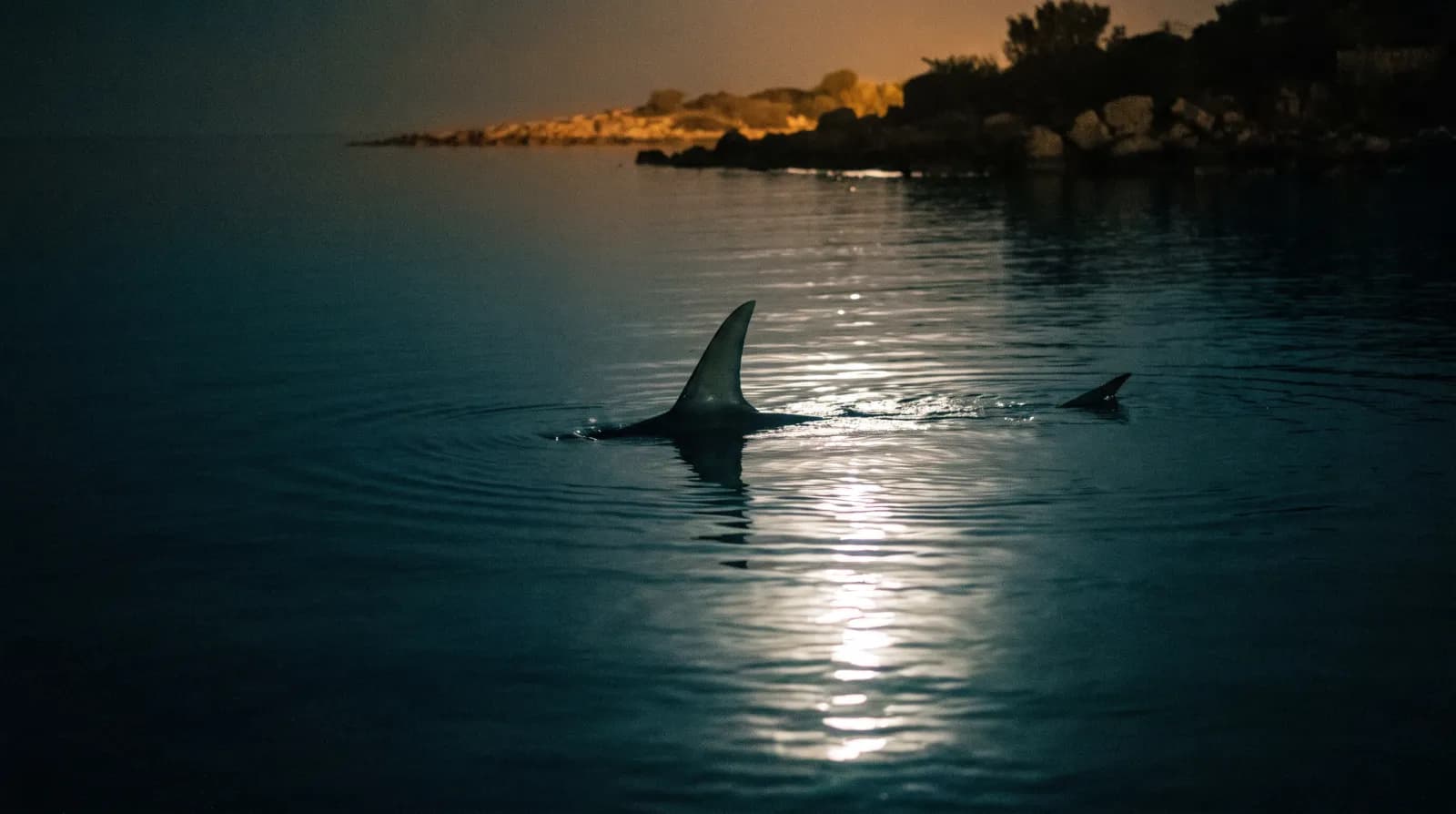
Prohibited statewide, and we would not do it anyway. The giants patrol the first sandbar on their own — the bait goes to them.
Prohibited species stay in the water
Great hammerheads, tigers, lemons and sandbars are among Florida's 29 protected species. They never leave the water, the gills stay under, and they go back the moment the hook is out or cut. No measuring and no posing.
Release without delay
Bulls and blacktips get a quick length and a photo in the shallows, then go back. Protected species go straight back with neither. We never keep a shark.
The Release
Under a minute,
back in the dark
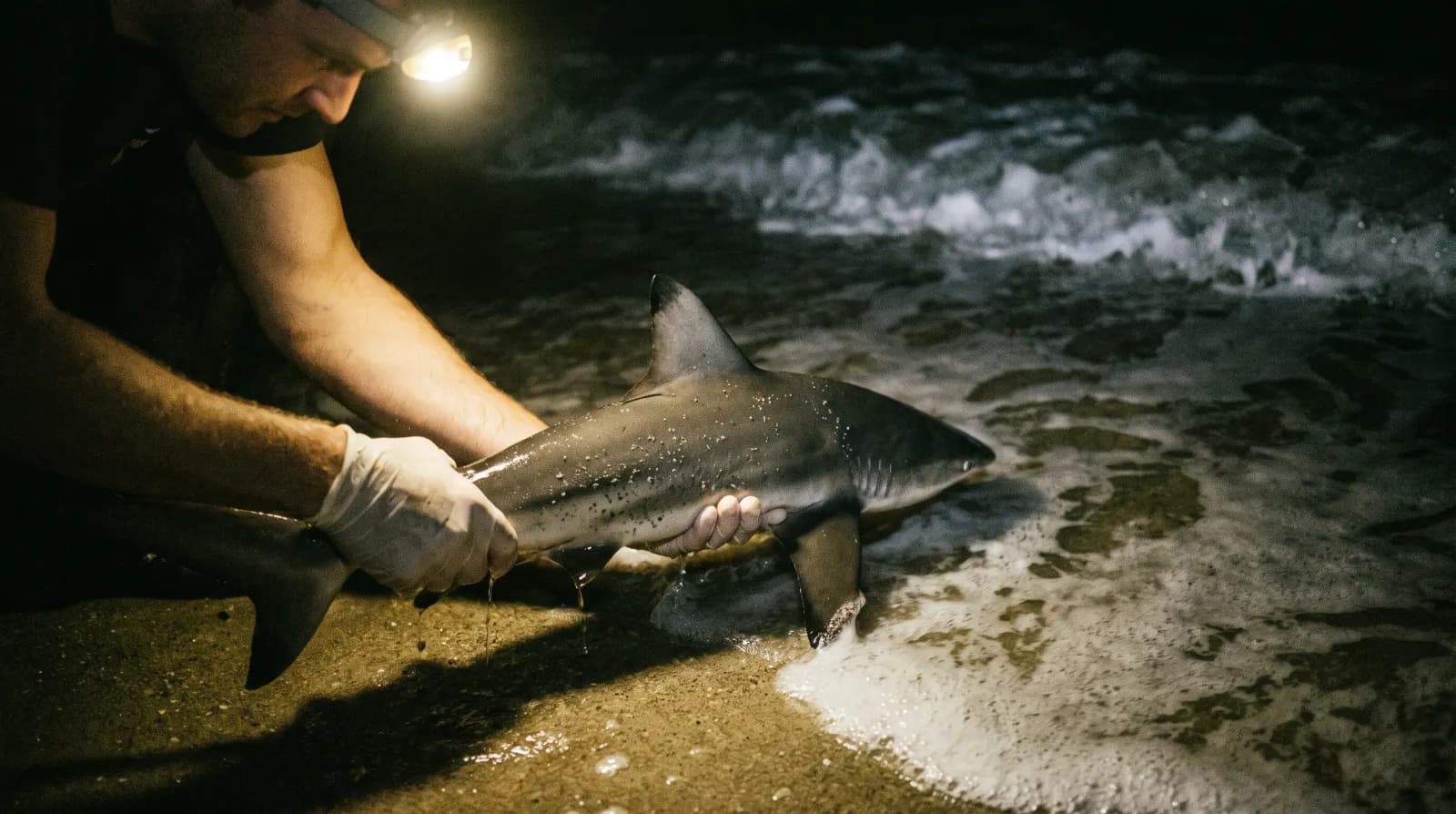
The release is the most rehearsed minute of the night. The shark is led into the shallows, never dragged dry. Your guide controls the leader and the cutter goes to the hook. A bull or blacktip gets a quick length while she's still in the water; a protected species goes straight back. Circle hooks usually sit in the corner of the jaw, so most come out clean. When one doesn't, it's cut and left to rust out.
A push toward deeper water, two tail beats, and she's gone. If she was a bull or a blacktip, you leave with a photo and her length for the log.
Learn it with a rod in your hands.
Tell us the dates you have in mind and how many are coming. $450 a night for the whole group, no deposit, and you'll hear back the same day with open nights.